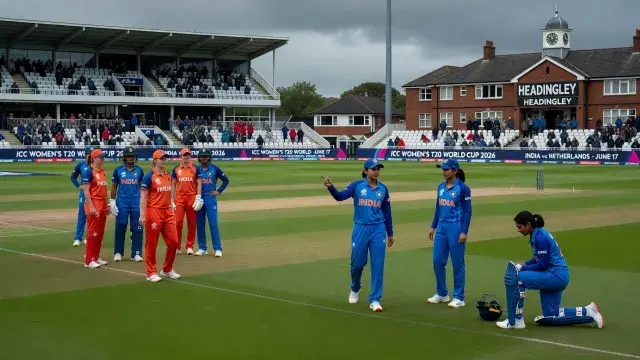
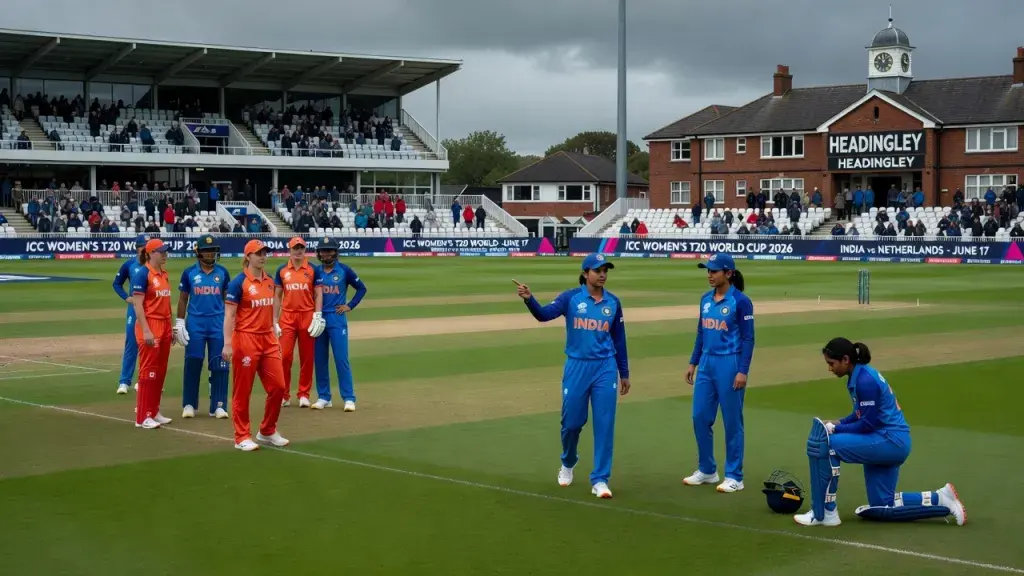
India Women take on Netherlands Women in their second group-stage fixture of the ICC Women's T20 World Cup 2026 at Headingley, Leeds on June 17, looking to build on a commanding 64-run victory over Pakistan in their tournament opener. Netherlands, meanwhile, arrive at this contest still chasing their first win of the competition and facing a steep challenge against one of the tournament favourites.
Netherlands captain Babette de Leede won the toss and opted to field first, citing early movement in the Headingley surface as a factor she hoped her side could exploit. Harmanpreet Kaur accepted the decision without reservation, though she acknowledged that batting first presents its own set of challenges - not unlike the varied demands you see across competitive sport globally, where tactical flexibility under pressure separates the best from the rest, whether you are following cricket, football, or even checking bare knuckle boxing odds for a sense of how underdogs are assessed in any discipline. Kaur was direct about where India must improve: "I think the powerplay with both bat and ball is something we are really looking forward to improving. Hopefully today we will bat positively in the powerplay and, while bowling, if we can get a few wickets in the powerplay, that will be important."
India Make Targeted Changes to Address Powerplay Concerns
Kaur's words were backed by action in the selection room. India have made two changes to the side that beat Pakistan: Nandini Sharma comes in for Arundhati Reddy, and Yastika Bhatia replaces Bharati Fulmali. The reasoning is clear. In the match against Pakistan, both pace options - Reddy and Kranti Gaud - finished wicketless, while the pitch offered comparatively more assistance to the spinners. Reddy's form has been a concern stretching beyond this tournament: she took two wickets across three T20Is against England and just one in four matches in South Africa, and her two-over spell against Pakistan yielded 21 runs with no reward.
Nandini Sharma Comes In with Strong Recent Credentials
Sharma's inclusion is not simply a reactive call - it is backed by a sustained run of form. She finished as joint-highest wicket-taker in WPL 2026 with 17 wickets, operating at a strike rate of 13 and an economy of 8.3. She also claimed four wickets in the T20I series against England. Crucially for what India need at Headingley, she has a demonstrated ability to take wickets in the powerplay, which aligns directly with Kaur's stated tactical priority. The pitch, which offers some initial movement, suits a bowler capable of hitting good lengths early and asking questions of top-order batters.
Bigger Picture: India Eye Comfortable Path to the Knockout Rounds
India remain without a Women's T20 World Cup title, and every result in this group phase carries weight. A second consecutive win - ideally by a healthy margin - would put them in a strong position on the points table before what promise to be tougher assignments against Australia and South Africa. Netherlands, though still seeking their first point of the tournament, should not be dismissed without consideration: de Leede's decision to field first suggests they have a game plan and believe the conditions can work in their favour. India, with Kaur setting the tone from the top and Sharma potentially delivering in the powerplay, will be looking to make that plan redundant inside the first six overs.