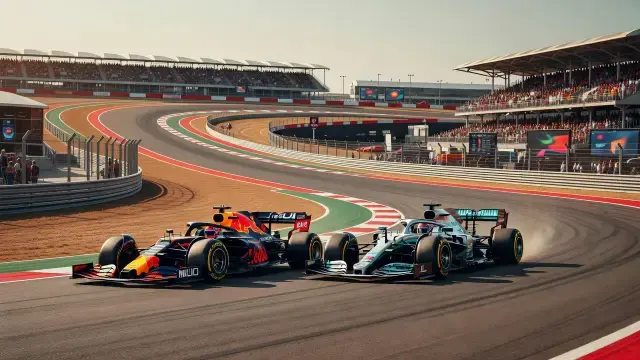
Formula 1 returns to the Circuit of The Americas this week for one of the sport's genuine tent-pole events, a race that draws vast crowds, celebrity attention and enormous television audiences. But beneath the spectacle lies one of the calendar's trickiest engineering and strategic puzzles - a track that punishes compromise and rewards perspective over raw pace.
A Lap That Refuses to Be Solved
COTA is popular with teams precisely because it is unforgiving. The opening sector, inspired by Silverstone's fast sweeps, demands a car planted and confident at high speed. The remainder of the lap wants something altogether different: a platform that excels in the slower, more technical corners. Add in a notoriously bumpy surface, and engineers are left hunting for a set-up that can never be perfect everywhere - only as good as the compromise allows. Ride height, damper stiffness and plank wear all factor into decisions made under pressure across three practice sessions, with simulator work overnight informing each step. Teams typically arrive at FP1 with a baseline built from simulation data, then adjust through the weekend as drivers report back - some comfortable with a stiffer platform, others needing more compliance.
Qualifying's Tightrope and a Driver's View
Finding one clean lap at COTA is its own challenge. An out-lap that brings tyres to temperature for the fast first sector risks overheating the left-side rubber through the long, punishing right-handers later on. Go the other way, and the car may be underprepared early but stronger late. There is no universally correct answer - only trial and adjustment through Friday running, refined further in FP3 as track rubber builds and grip evolves. Drivers echo that uncertainty. One said the key is accepting that comfort is never total: "You're never going to feel completely comfortable on a lap here... it's about finding a happy medium across the whole lap." Prior experience at the track, even years old, still offers a useful reference point, though adapting between categories - as some drivers moving from other disciplines have noted - adds another layer of adjustment.
Strategy on a Knife's Edge
COTA has long sat between one-stop and two-stop territory. From 2021 to 2023 it consistently produced two-stop races, with varying compound combinations taking victory each year. That shifted in 2024 to a one-stop race, and last year Pirelli experimented with a wider compound spread - C1, C3 and C4 - hoping to create a split strategy battle between steady one-stoppers and quicker two-stop runners. Instead, the race settled into a one-stop affair on the softer tyres, won on a medium-to-soft strategy. This year Pirelli reverts to the more conventional C2-C3-C4 selection, with temperature likely to be the deciding factor once again - hot conditions typically push degradation up, though two-stop races have been uncommon through the 2026 season so far.
Turn 19 and the History That Makes COTA Special
If Turns 1 and 12 provide the early fireworks, Turn 19 is where races are often settled. A fast, downhill, 90-degree left-hander at the end of the stadium section, it arrives just as tyres are at their most fragile, tempting drivers into track-limits trouble on exit. The preceding three corners effectively form one long right-hand arc, frequently producing side-by-side battles that spill into Turn 19 itself. This year's shift in the Overtake Mode detection point - now positioned after the corner rather than before it - adds a fresh tactical wrinkle to following and attacking through that sequence. COTA's history only adds to the stakes: the storm-disrupted 2015 race, decided in a frantic ten-lap sprint, and the tense 2021 title fight between Lewis Hamilton and Max Verstappen, shaped by the fine margins of undercut timing, both stand as reminders of how quickly fortunes can turn here.